Al momento, questa pagina non è disponibile nella lingua scelta. È possibile visualizzare una traduzione automatica realizzata con Google Translate. Renishaw declina qualsiasi responsabilità relativa alla fornitura di tale servizio e specifica di non avere controllato la traduzione.
È possibile contattarci per richiedere ulteriore assistenza.
NASA 13-bit encoder award
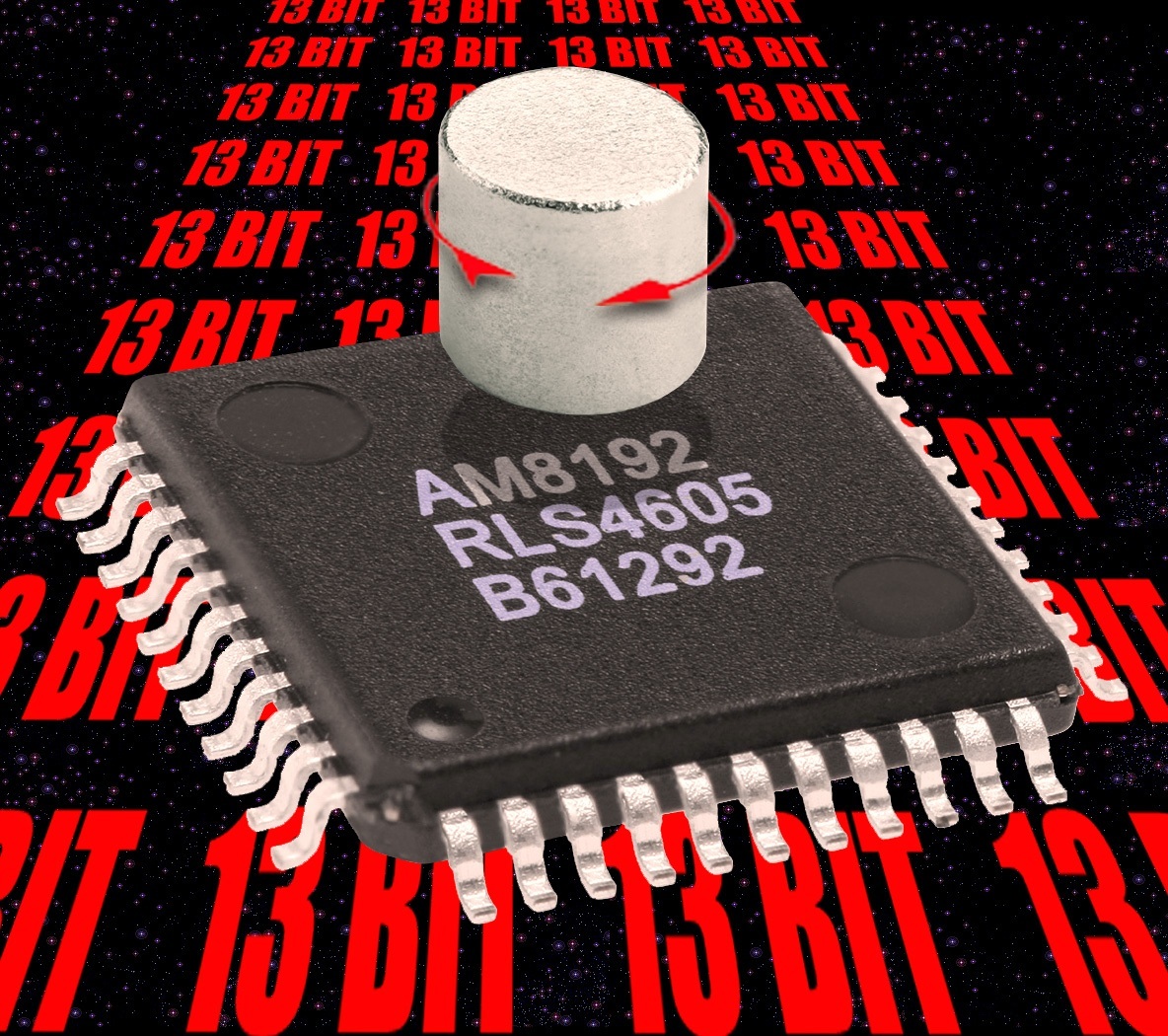
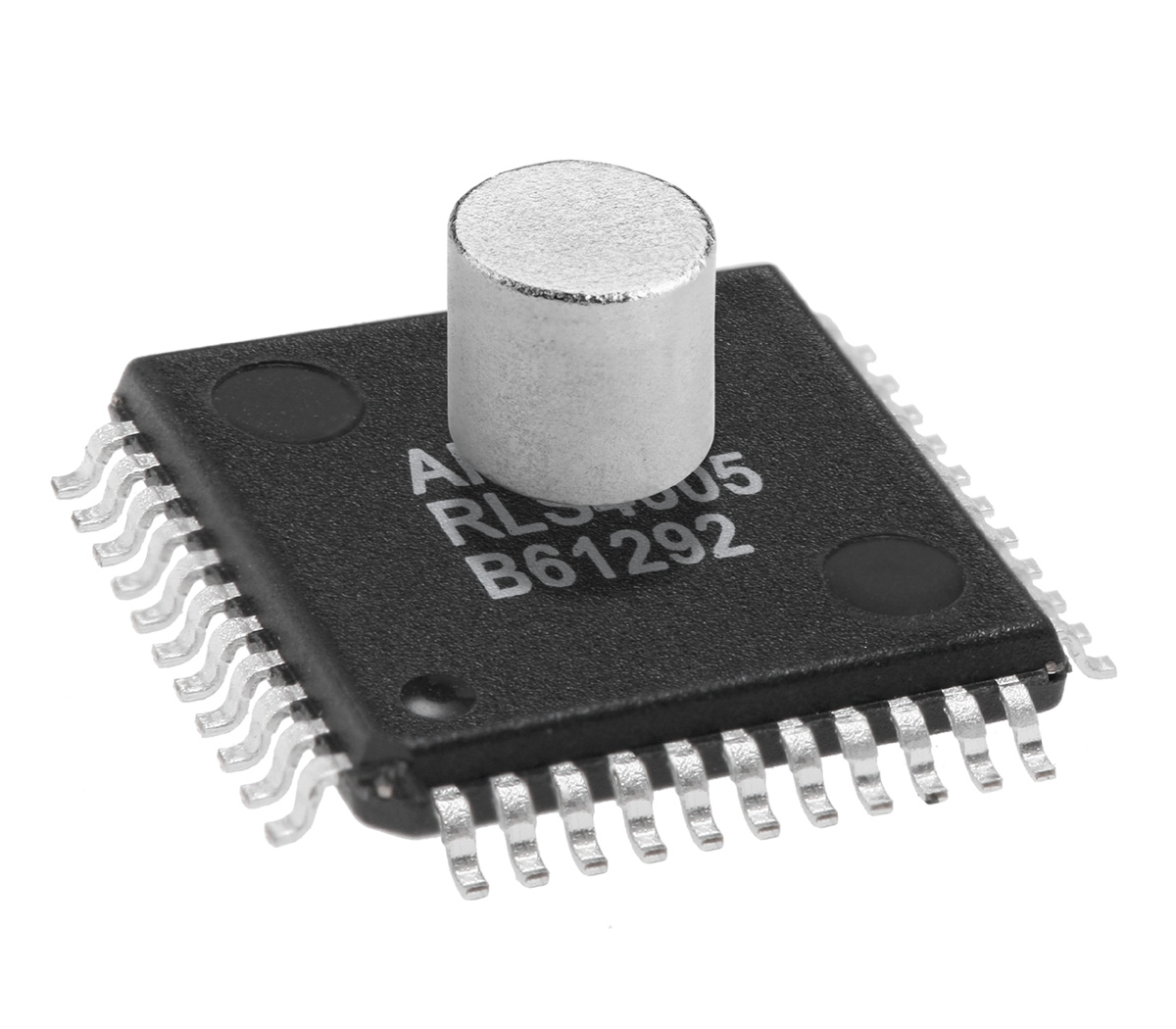
Renishaw's new 13-bit magnetic sensor for rotary and angular positioning control was named "Product of the Month" for November 2006 by NASA Tech Briefs magazine, an official publication of the USA's National Aeronautics & Space Administration (NASA).
Following this, the 13-bit sensor has been nominated for the 12th Annual Readers' Choice Award, to find the one product that the readers of Tech Briefs feel to be the most significant introduced to the US engineering community in 2006.
NASA Tech Briefs is the USA's widest read engineering magazine, with a circulation in excess of 190,000, and reported to its readers that the Renishaw sensors provide 8,192 counts per revolution and are available in chip, chip-on-board, and ready-to-mount packaged versions.
Sensor features and benefits
In its description of the sensors, NASA Tech Briefs stated that Renishaw has a solid-state, non-contact design featuring an integrated circuit chip that senses the position of a separate two-pole permanent magnet. The sensors are reported as being suitable for difficult environmental requirements, providing an operational range of -40°C to 125°C, and shock and vibration resistance. Friction-less, low-inertia operation enables 0.3° positioning accuracy at speeds to 30,000 rpm.
13-bit sensor range
The sensors are available in models providing absolute, incremental, analogue or digital outputs, as well as simultaneous SSI and incremental output. Chip and chip-on-board models allow integration into machinery and equipment designs, whilst packaged versions enclose the chip and electronics in metal cases. NASA Tech Briefs noted that the enclosed units are used in rugged applications and environments, with waterproof, fully encapsulated versions also available.
For further information about the new magnetic sensors, plus Renishaw's full range of position encoders, visit www.renishaw.com/encoders
About NASA Tech Briefs
When the U.S. Congress formed the National Aeronautics & Space Administration in 1958, it mandated in the charter that NASA and its contractors must report to industry any new, commercially-significant technologies developed in the course of their R&D, so that engineers, managers, and scientists could use this valuable information to improve their competitiveness and productivity. For more than three decades, this has been accomplished primarily through the publication of NASA Tech Briefs.
First issued as single sheet reports in the 1960s and converted to a magazine format in the 1970s, NASA Tech Briefs has been a joint publishing venture of NASA and Associated Business Publications (New York City) since 1985, a pioneering government-private sector partnership that has saved taxpayers millions of dollars in publishing costs while dramatically increasing the magazine's reach to OEM design/development engineers and managers. Today, NASA Tech Briefs' qualified circulation surpasses 190,000.
The monthly magazine features exclusive reports of innovations developed by NASA and its industry partners/contractors that can be applied to develop new/improved products and solve engineering or manufacturing problems. Authored by the engineers or scientists who did the work, the briefs span a wide array of fields, including electronics, physical sciences, materials, computer software, mechanics, machinery/automation, manufacturing/fabrication, mathematics/information sciences, and life sciences.
Most briefs offer a Technical Support Package, which explains the technology in greater detail and provides contact points for questions or licensing discussions.
NASA Tech Briefs also contains feature articles on successful NASA spin-offs, profiles of NASA tech transfer resources, news briefs, and application stories. Regular columns describe new patents, industry products, software, and literature.
Full article
-
 News release: World’s first 13-bit magnetic rotary encoder is NASA product of the month
Renishaw’s new 13-bit magnetic sensor for rotary and angular positioning control was named ‘Product of the Month’ for November 2006 by NASA Tech Briefs magazine, an official publication of the USA’s National Aeronautics Space Administration (NASA).
[119kB]
Editor downloads
-
NASA 13-bit award - all files
Renishaw’s new 13-bit magnetic sensor for rotary and angular positioning control was named ‘Product of the Month’ for November 2006 by NASA Tech Briefs magazine, an official publication of the USA’s National Aeronautics Space Administration (NASA).
[1.1MB] -
News release: NASA 13-bit award
Renishaw’s new 13-bit magnetic sensor for rotary and angular positioning control was named ‘Product of the Month’ for November 2006 by NASA Tech Briefs magazine, an official publication of the USA’s National Aeronautics Space Administration (NASA).
[34kB]
Images
-
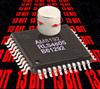 NASA 13-bit award
Renishaw’s new 13-bit magnetic sensor for rotary and angular positioning control was named ‘Product of the Month’ for November 2006 by NASA Tech Briefs magazine, an official publication of the USA’s National Aeronautics Space Administration (NASA).
[521kB] -
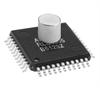 13 bit encoder
Renishaw’s new 13-bit magnetic sensor for rotary and angular positioning control was named ‘Product of the Month’ for November 2006 by NASA Tech Briefs magazine, an official publication of the USA’s National Aeronautics Space Administration (NASA).
[301kB]